
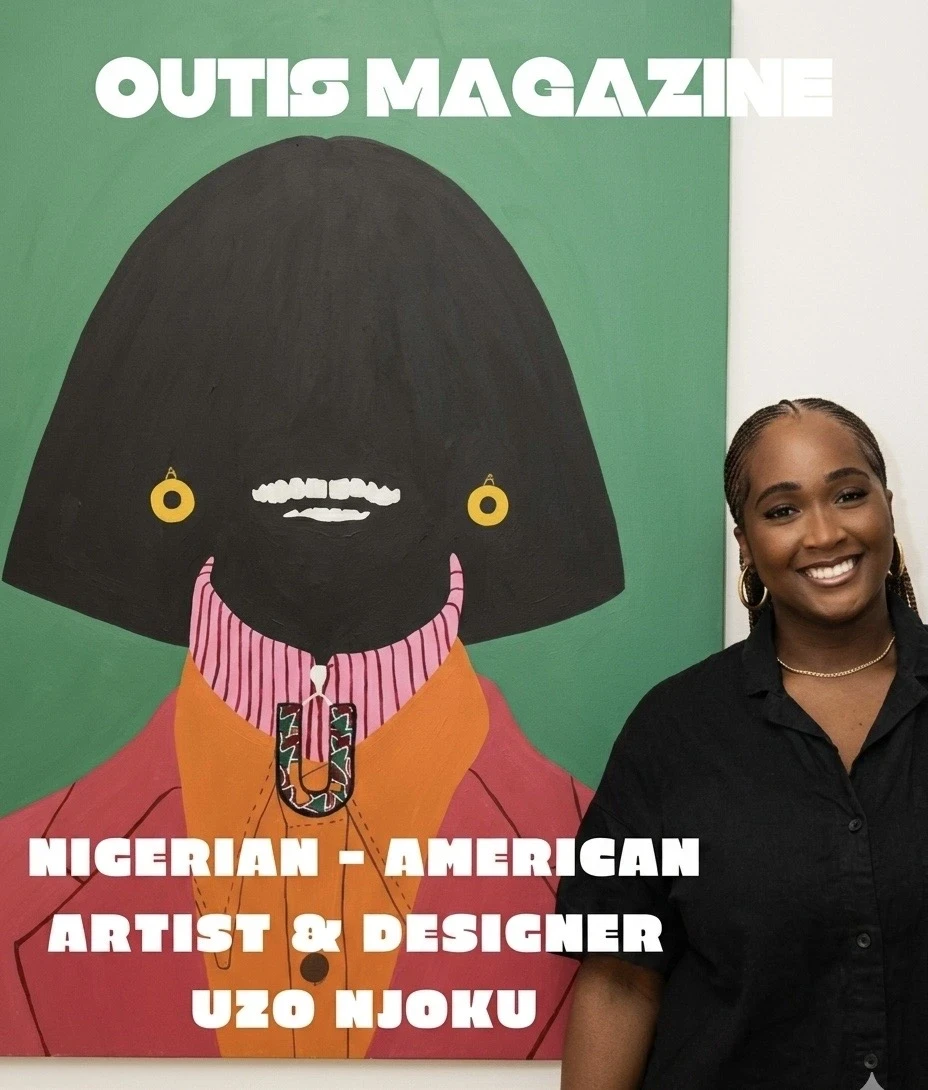
Uzo Njoku
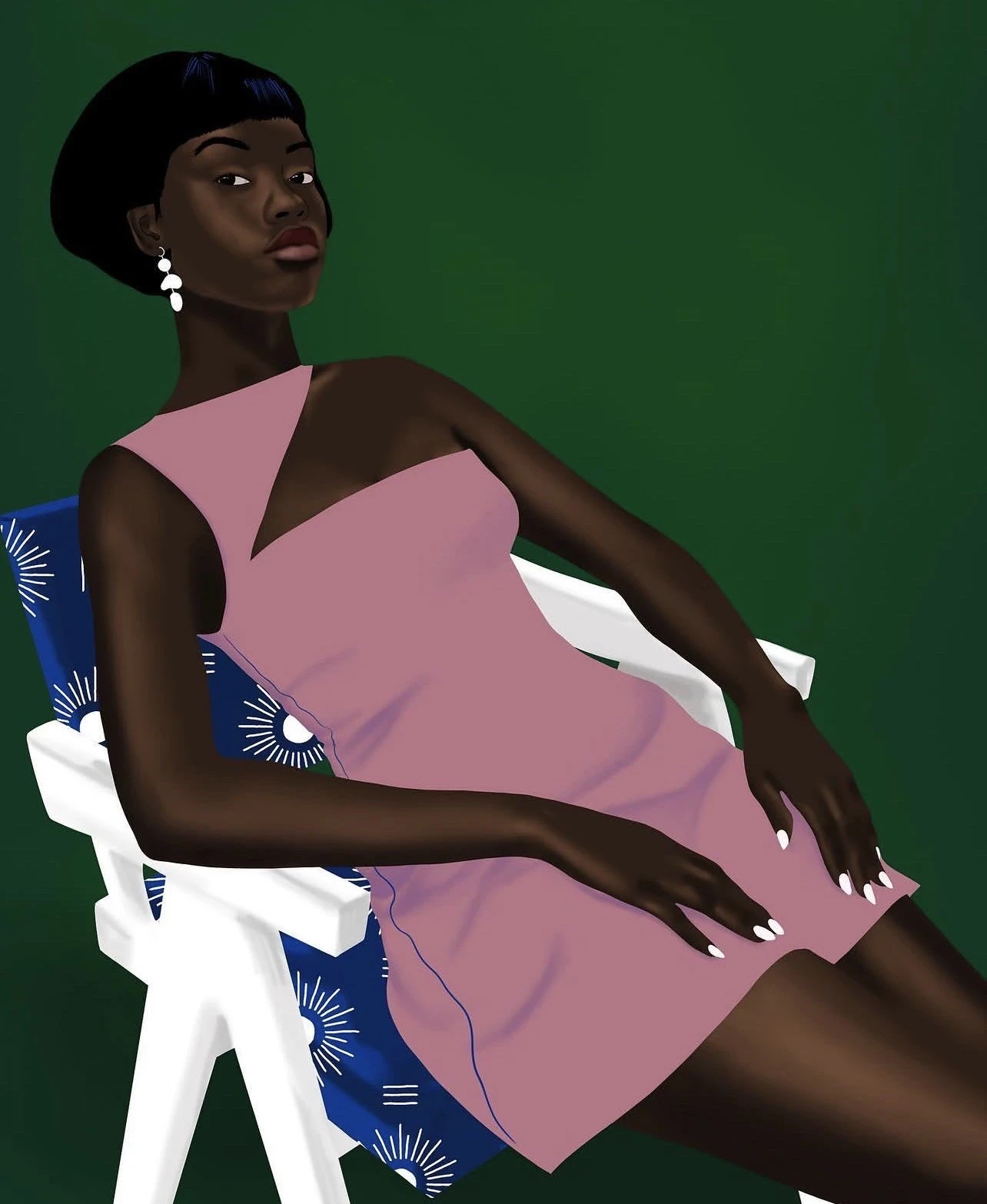
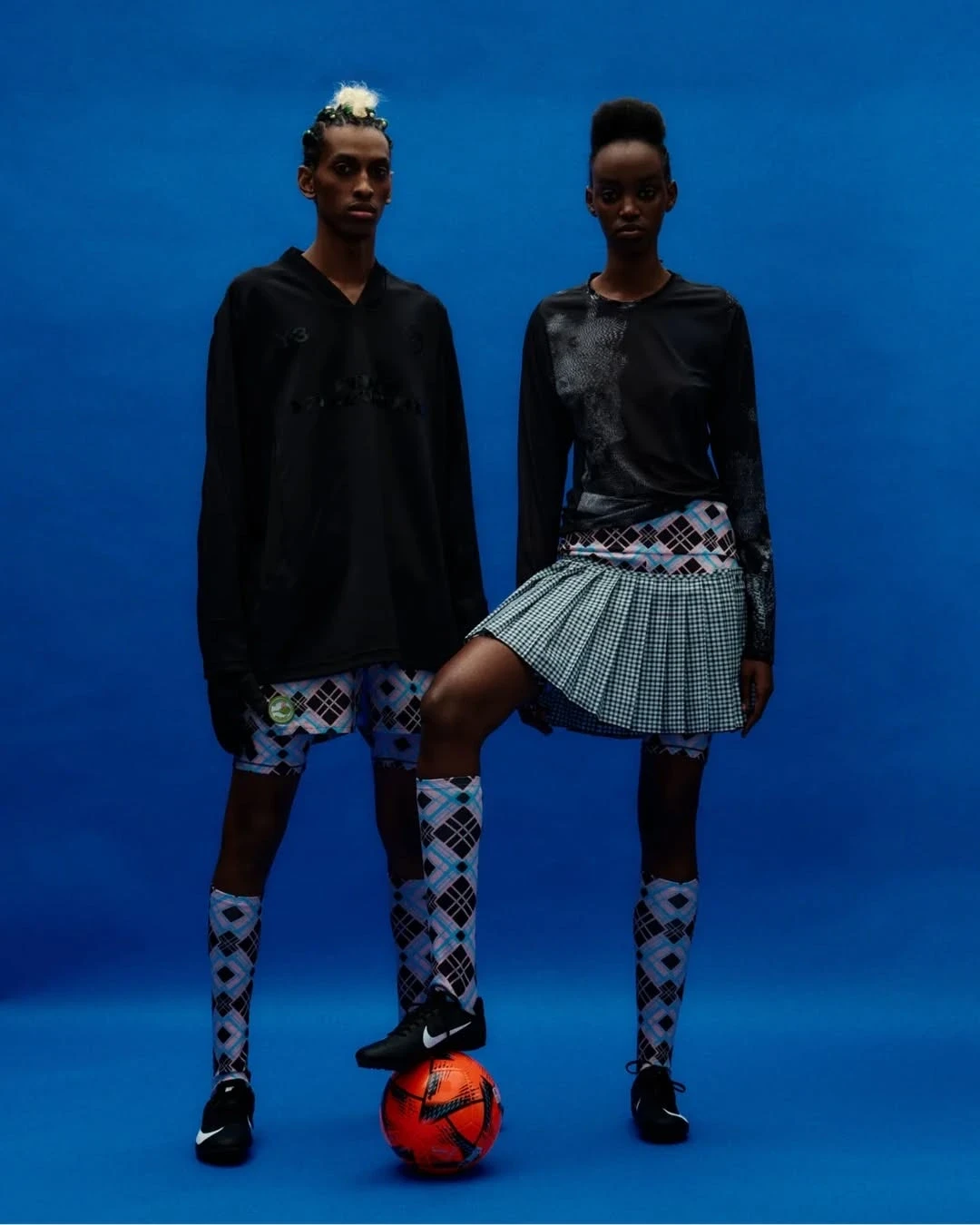
Scroll past a burst of vivid color, bold patterns wrapping around confident Black women, radiating joy, empowerment, and cultural depth, and you may have entered the world of Uzo Njoku. Her work is instantly recognizable and deeply intentional, rooted in identity while moving fluidly between fine art and design. Njoku occupies a distinct space in contemporary art, one shaped by expression, entrepreneurship, and a clear understanding of how culture lives beyond the gallery wall.
Born in 1996 in Lagos, Nigeria, Njoku moved to the United States at the age of seven and was raised in Maryland. Her upbringing was strongly influenced by Igbo culture, which continues to inform her visual language. She initially studied statistics at the University of Virginia, a practical path familiar to many children of immigrants. Over time, art became unavoidable. She switched to Studio Art, supporting herself through night shifts and side jobs to complete her degree. After graduating, she moved to New York City and committed fully to building a creative career. Describing herself as an artrepreneur, Njoku focused early on sustainability, developing multiple income streams around her work while navigating doubts about belonging in traditional art spaces. That persistence has become a defining part of her practice.
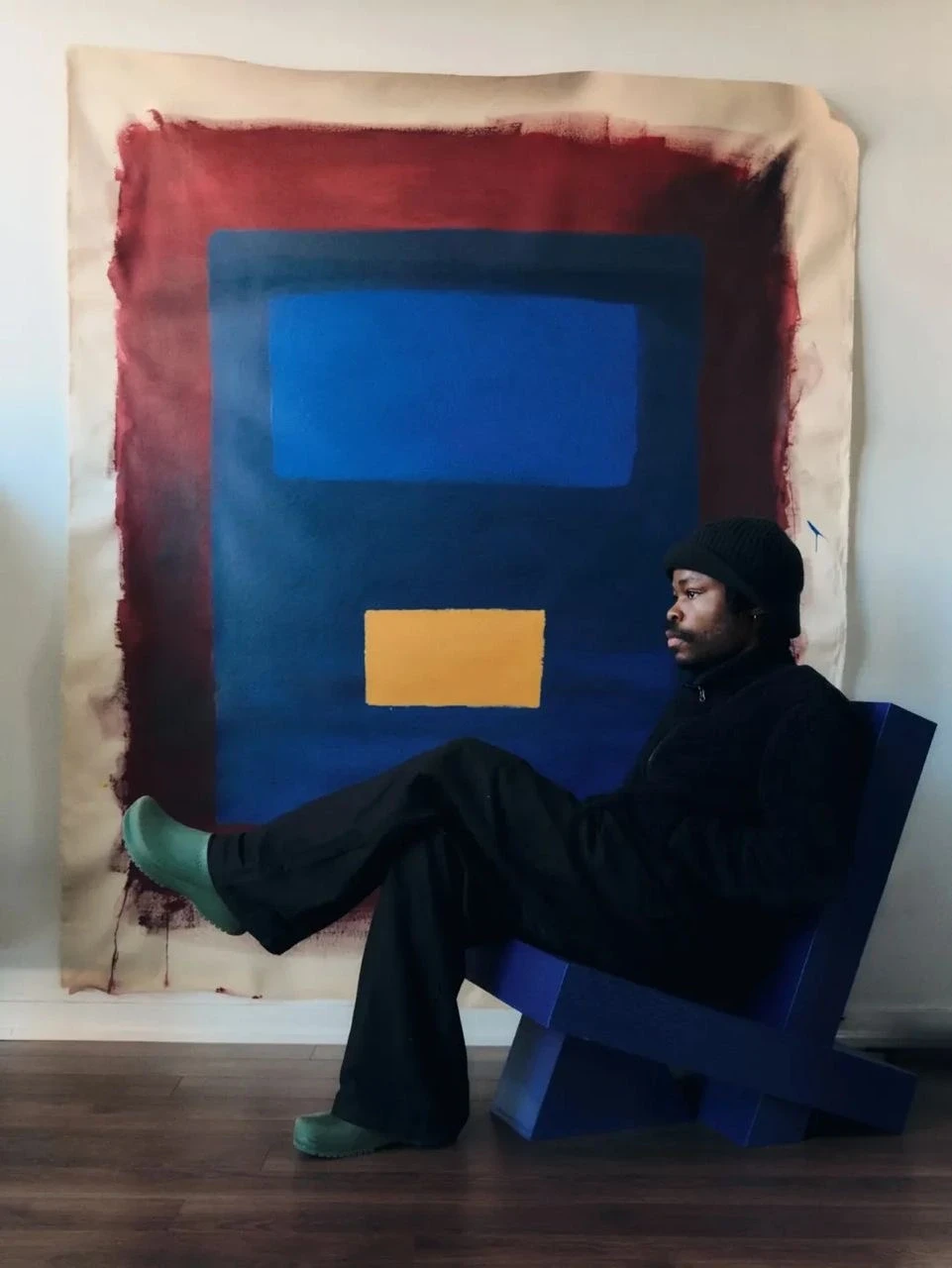
Njoku’s artistic style is driven by saturated color, layered patterns, and portraits that center Black women in moments of presence, joy, and quiet strength. Drawing from Igbo motifs and African traditions while incorporating Western influences, her work feels both contemporary and ancestral. Her practice is not confined to a single medium. In a recent Coffee with Outis conversation, Uzo Njoku shared that when she feels creatively stuck, she simply shifts form, moving between painting, digital art, tufting, or even reading. This fluid approach keeps her creativity in motion and reflects one of the most defining aspects of her work: a refusal to treat art as static. That openness to movement, experimentation, and learning is what allows her visual language to remain fresh while staying rooted in identity.
Read more